
Technology: The Hidden Force Behind Every Major Change in Beauty
- Business
Ask a room full of hairdressers what changed the industry over the last century, and most will talk about trends, techniques, and iconic artists.
Few will mention electricity, plastics, aerosol technology, software, online booking, or artificial intelligence. Yet each of those innovations may have influenced our profession as much as any haircut, color trend, or fashion movement in history.
When we look back at the evolution of professional beauty, we tend to focus on the visible changes. We remember the styles. We remember the artists. We remember the moments that captured public attention.
What we often overlook are the technologies that made those moments possible.
In many ways, technology has been one of the most important forces shaping our industry since the birth of the modern salon in the early 1900s.
Consider electricity.
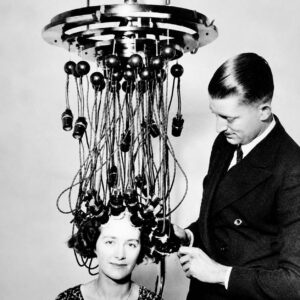
As electrical power expanded across America, salons gained access to new tools and services. Early permanent wave machines, electric dryers, improved lighting, and countless other innovations transformed what salons could offer clients. Those technologies didn’t simply improve efficiency—they expanded creative possibilities.
The pattern repeated itself throughout the twentieth century.
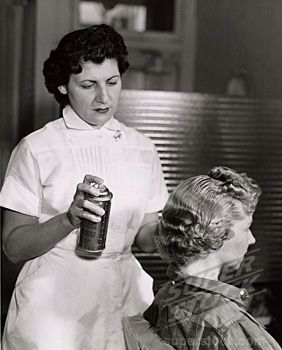
Advances in chemistry brought new color technologies and product formulations. Plastics changed everything from packaging to professional tools. Aerosol technology helped create entirely new styling possibilities and influenced some of the most recognizable looks of their era.
Even the rise of precision haircutting was influenced by technology. The widespread availability of handheld blow dryers in the 1960s and 1970s gave both stylists and clients new ways to create and maintain modern looks. The artistic vision was essential, but the tools mattered too.
The lesson is straightforward:
Technology influences artistry. It influences business models. It influences consumer expectations.
And ultimately, it influences the future of our profession.
More recently, the internet and social media transformed the industry once again.
For generations, inspiration traveled slowly. Education was often limited by geography. Today, a stylist can learn from an educator on another continent, watch a technique demonstration in real time, or share their work with a global audience from a smartphone.
Technology expanded access to education. It amplified artistry. It created entirely new career opportunities. It changed how professionals build brands and how consumers discover them.
At the same time, technology transformed the business side of beauty.
Online booking changed client expectations. Point-of-sale systems evolved into sophisticated business management platforms. Marketing automation, loyalty programs, digital consultations, inventory tracking, reporting dashboards, and online reviews became part of everyday salon life.
What’s important to remember is that very few of these innovations originated within our industry.
Online booking didn’t begin in beauty. Artificial intelligence didn’t begin in beauty. The technologies that shaped modern commerce, communication, and business management were developed elsewhere before entrepreneurs and innovators adapted them to our profession.
That has always been the pattern.
Innovation happens somewhere.
Then beauty finds a way to apply it.
Artificial intelligence is simply the latest example.
While much of the conversation around AI focuses on future possibilities, practical applications are already appearing across our industry. AI is helping businesses improve communication, analyze data, support marketing efforts, streamline operations, and create more efficient client experiences.
More importantly, it is encouraging leaders to think differently about how work gets done.
The question isn’t whether technology will influence our future. It always has.
The real question is whether we are paying attention.
For Intercoiffure America Canada, that conversation has become an important part of our mission.
While artistry remains at the heart of everything we do, business innovation plays an equally important role in helping great salons thrive.
Over the last several years, ICA has intentionally created opportunities for members to learn about emerging technologies and their impact on professional beauty. Before AI became a mainstream topic across the industry, ICA was bringing thought leaders, technology companies, and innovators to our stages to share ideas, insights, and possibilities.
From presentations by technology partners including Phorest, Zenoti, and Glammatic, to insights shared by salon leaders and ongoing presentations on AI from ICA’s now general manager, Gordon Miller, ICA has sought to create an environment where members can explore innovation without losing sight of what makes our profession unique.
We’re especially grateful to the many salon leaders who have openly shared their growing knowledge and experiences, including Sam Brocato, Jenna Noel, Frank Westerbeke, and Michaella Blissett Williams. Their willingness to test new ideas, innovate, share results, and discuss lessons learned has helped move the conversation forward for all of us.
As we prepare for Fall Atelier 2026, that commitment continues. Members can once again expect conversations focused on emerging technologies, evolving business practices, and the innovations shaping the future of professional beauty. To learn more, go to Intercoiffure.com