
Mastery in Hairdressing: Why the Pursuit of Craft Never Ends
Arts & Craft Spotlight Extended:
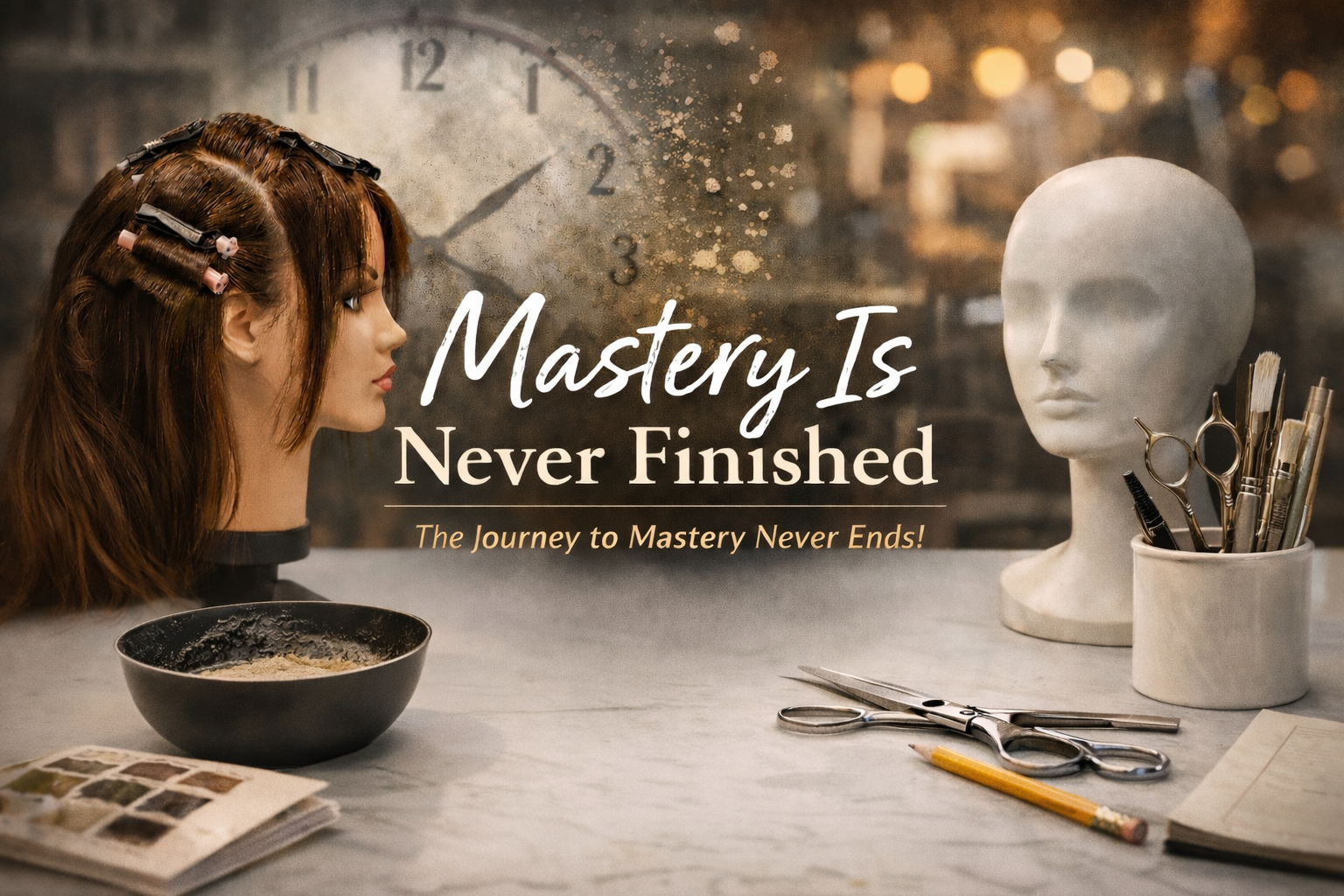
Mastery Is Never Finished
Why the pursuit of craft is what separates good from unforgettable
We often talk about “mastery” like it’s a destination—but in reality, it’s a moving target. In a craft like hairdressing, the more you learn, the more you realize how much there is still to master.
There’s a widely shared idea, popularized by author Malcolm Gladwell, that it takes ten thousand hours to truly master anything.
“Time spent leads to experience; experience leads to proficiency; and the more proficient you are the more valuable you’ll be.”
It’s a powerful concept. And in many ways, it’s true. But in hairdressing, there’s an important twist: those hours never really stop.
Because mastery isn’t about a finish line. It’s about a way of working.
In our world, technical skill is everything, cutting, color, texture, consultation. But none of these are static. They evolve. Trends shift. Tools improve. Client expectations rise.
What felt like mastery five years ago can feel outdated today.
That’s the reality of working in a living craft.
The best hairdressers understand this. They don’t chase perfection; they chase progress. They stay curious. They revisit fundamentals. They refine techniques they’ve done thousands of times. And they remain open to learning, even when they’re already successful.
Because the moment we think we’ve “arrived,” we stop growing.
True mastery lives in repetition, but also in reinvention.
It’s built in the quiet moments: refining a section, rethinking a formulation, improving a consultation, mentoring a younger stylist, or approaching a familiar technique in a new way.
And here’s the truth: the bar keeps moving.
New technology. New products. New business models. New client expectations.
Which means mastery isn’t something you achieve once. It’s something you recommit to, again and again.
For ICA members, this is where community matters. Being surrounded by peers who are also pushing forward creates a culture where growth is expected, not optional.
Because in a craft like ours, standing still is the fastest way to fall behind.
Mastery isn’t about being the best in the room. It’s about continuing to grow, long after you could stop.